Español

The short answer: a reputation intelligence platform collects what the public can see about your business (reviews, listings and, now, what AI assistants say about you) for every location, and turns it into a short list of what to fix next. The intelligence is in that second part. Plenty of tools collect data. Fewer tell you what to do with it, and fewer still do the work.
What a reputation intelligence platform tracks
For a local or multi-location business, five signals decide whether a customer picks you:
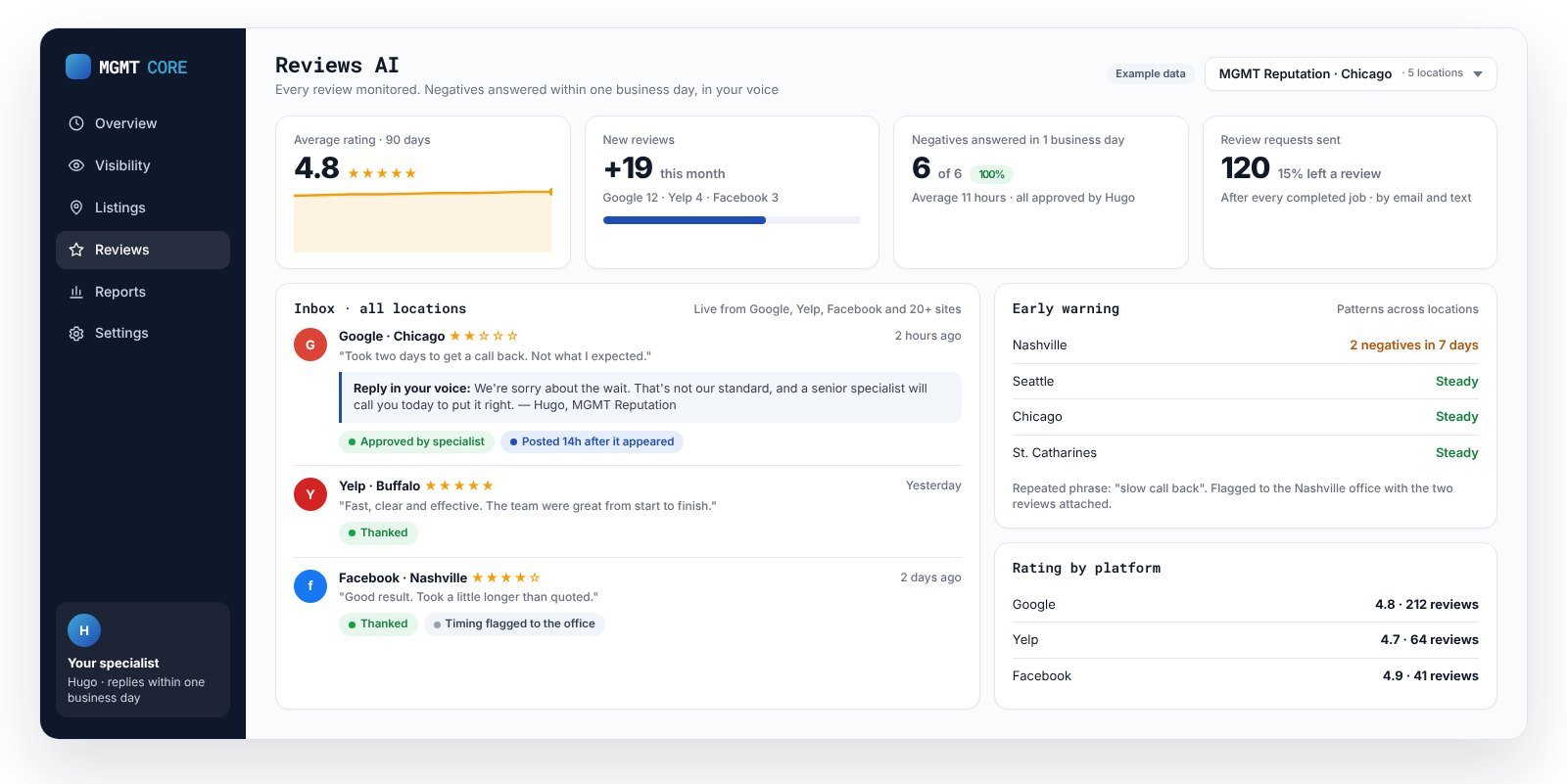
- Reviews: every new review on Google and the other major review sites, the rating trend, and the complaints that keep repeating.
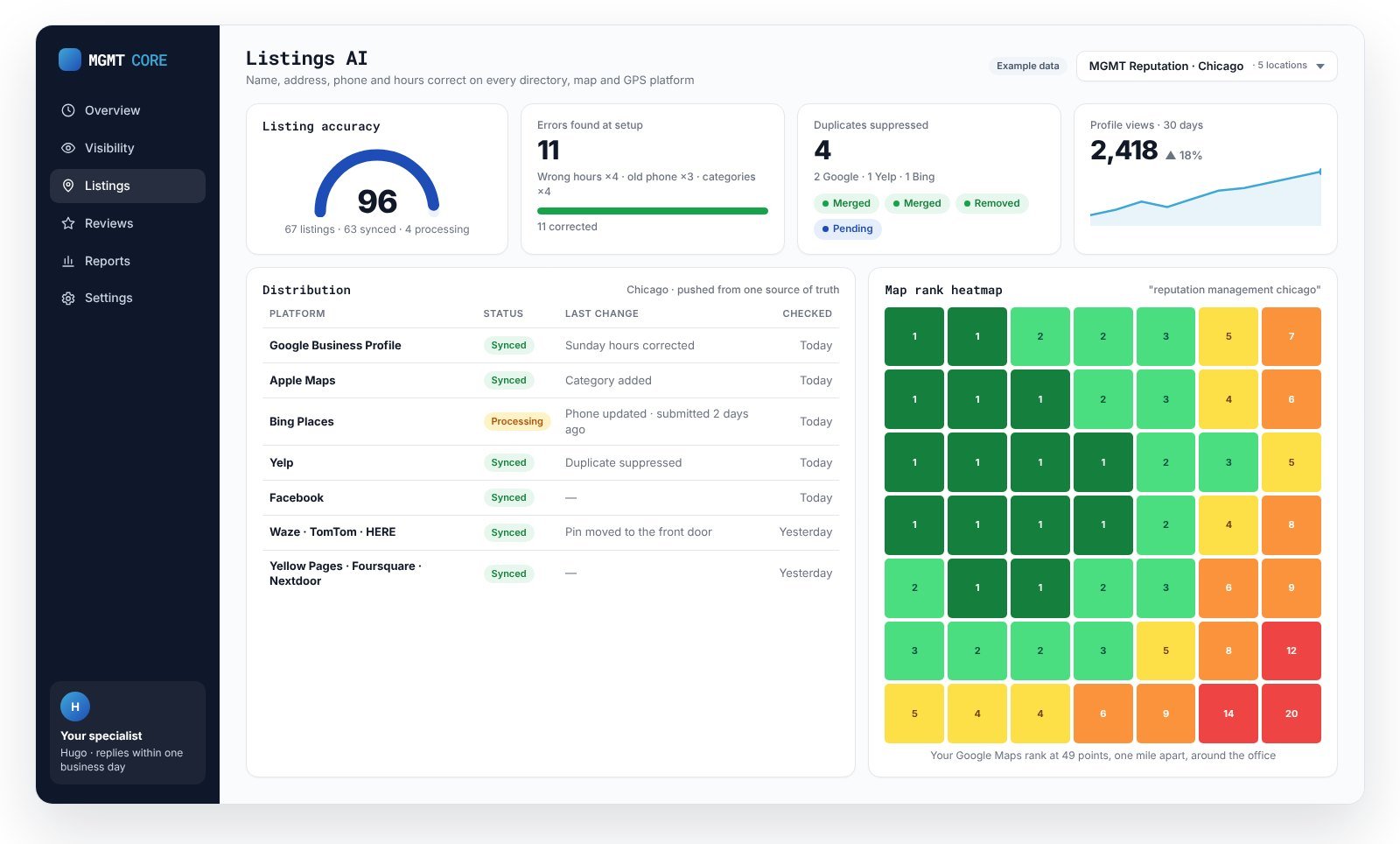
- Listings: whether your name, address, phone, hours and categories are correct across the major directories, maps and GPS platforms, and whether duplicates are confusing customers.
- Local map position: where each location shows on the map, street by street, for the searches that matter to you.
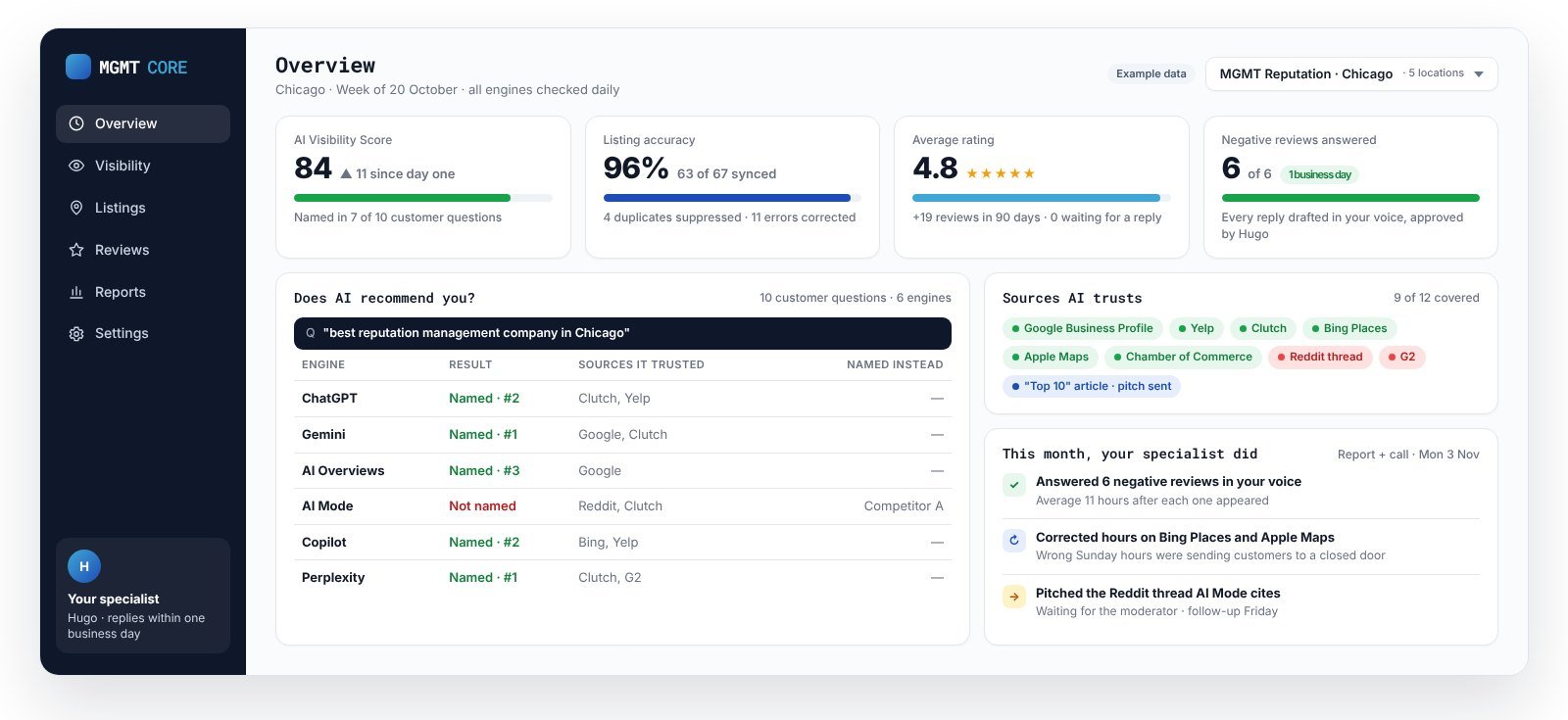
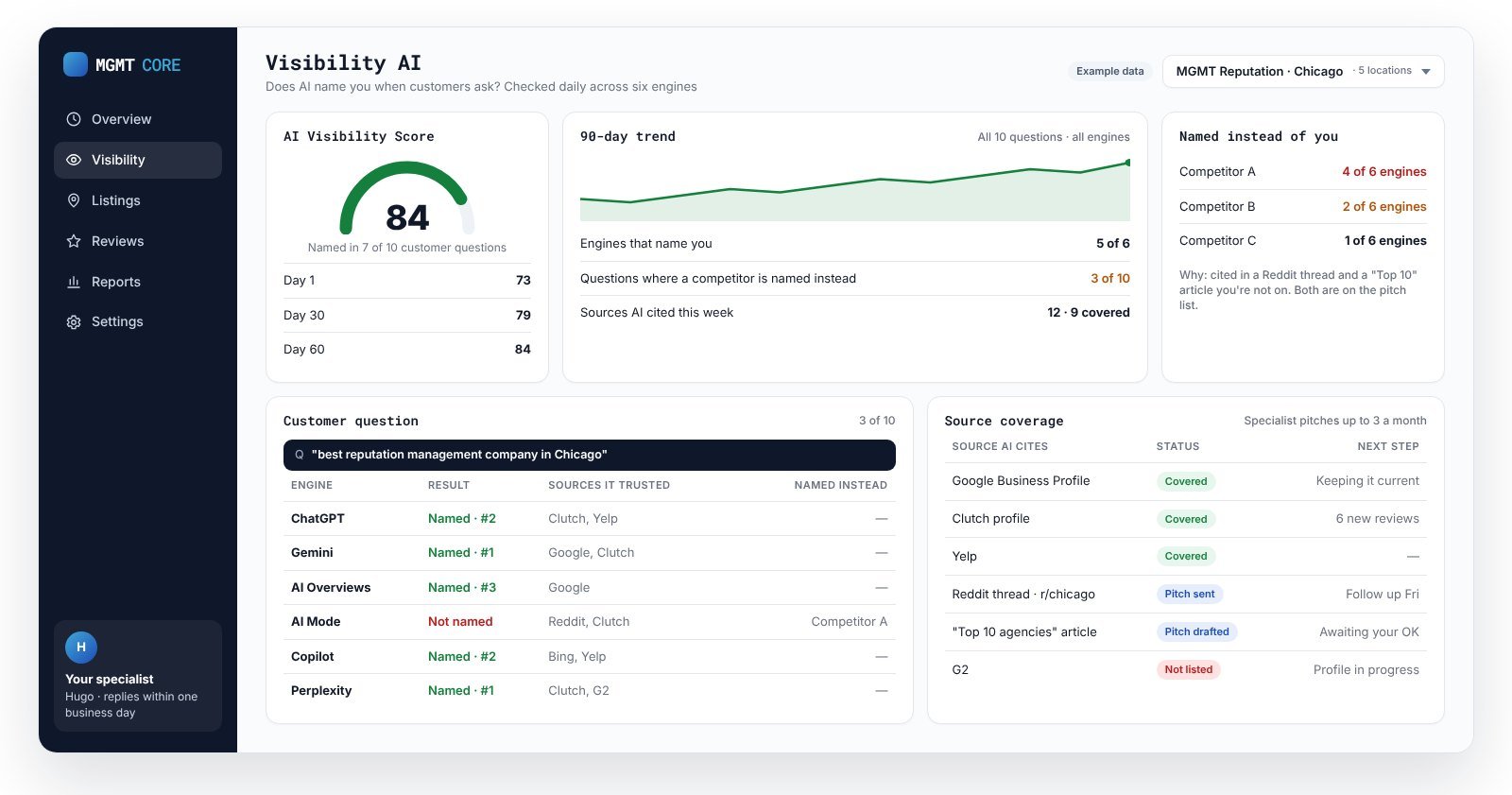
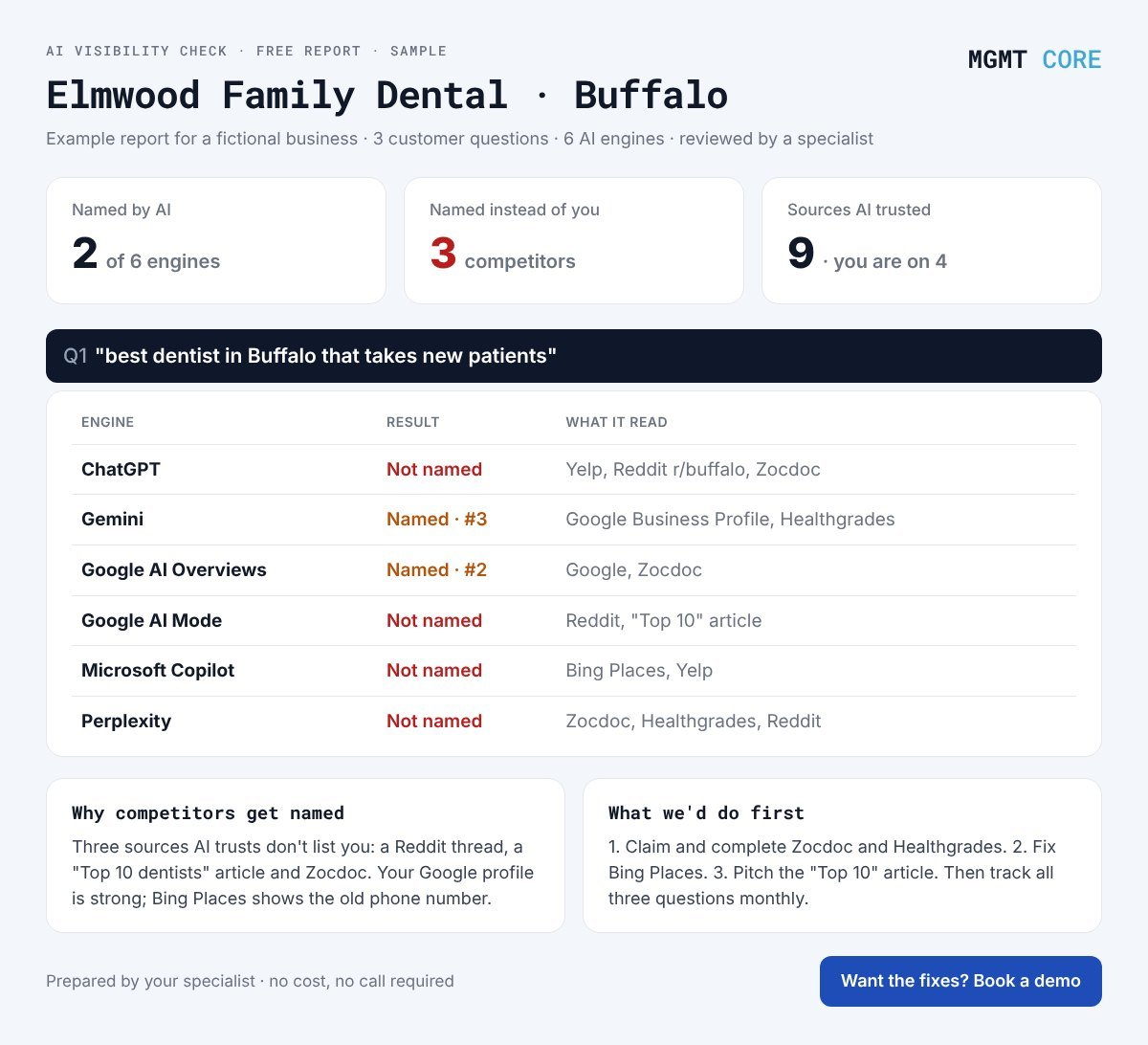
- AI answers: whether ChatGPT, Gemini, Google AI Overviews and AI Mode, Microsoft Copilot and Perplexity name your business when a customer asks for a recommendation, and who gets named instead.
- Sources: which websites those AI answers are built from, so you know where you need to appear.
Why AI answers belong in the picture now
A growing number of customers ask an AI assistant before they ever open a map. The assistant replies with a short list, not ten blue links, so a business is either named or invisible. Reviews and listings feed those answers, which is why watching them separately from AI visibility only gives you half the story. See how Visibility AI tracks it.
Intelligence vs. a dashboard
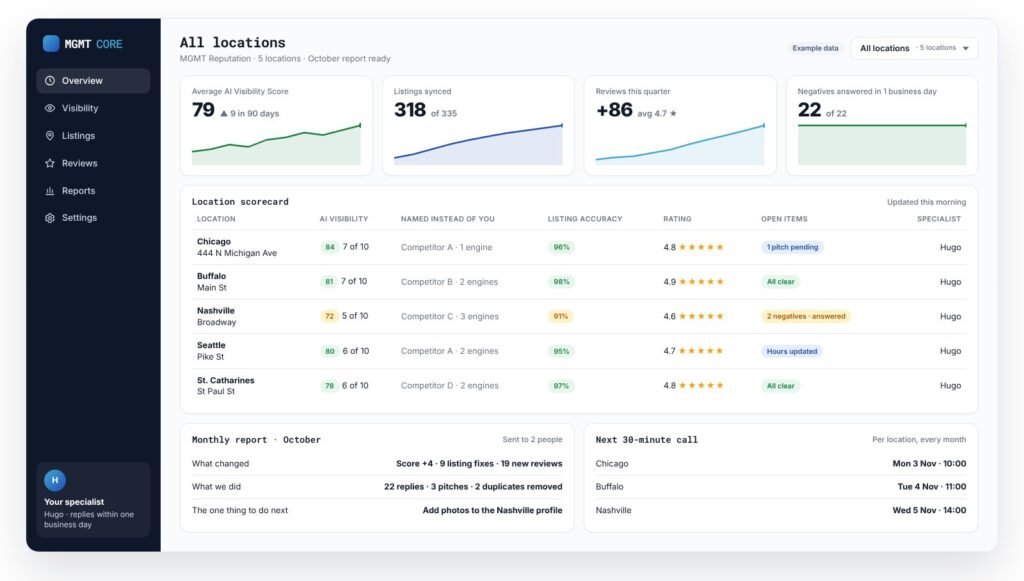
A dashboard shows numbers. Intelligence answers three questions for each location:
- What changed this month?
- Why did it change?
- What is the one thing to fix next?
If a tool cannot answer the third question, it is a monitor. Monitors are useful, but someone still has to read every alert, write every reply and chase every wrong listing.
Software that watches, people who fix
This is the gap most platforms leave open. The software spots a wrong Sunday time on Apple Maps, a negative review waiting for a reply, or a “Top 10” article that AI cites and that leaves you out. Then it waits for your team to find the time.
MGMT Core is built the other way round. The software watches every location every day, and a named specialist on your account does the work: negative reviews answered in your voice within one business day, listings corrected, and the websites AI trusts pitched. Each month you get a report for each location and a 30-minute call to walk through it.
What to look for when you compare platforms
- A view per location. One score for the whole brand hides the location that is losing customers.
- AI visibility, not only search rank. Ask which AI engines it checks, and how often.
- Sources, not only mentions. Knowing you were left out is step one. Knowing which sources the AI used is what lets you fix it.
- Who does the work. Ask who writes review replies, who corrects listings, and how fast.
- Clear pricing. Per location, no long contract, and a plain list of what is included.
Comparing specific tools? See how MGMT Core compares with software-only tools, agencies and AI trackers.
Frequently asked questions
Is a reputation intelligence platform the same as review management software?
No. Review management software handles reviews. A reputation intelligence platform also covers listings, map position and what AI assistants say, and connects them, because a wrong listing or a missing source can cost you as many customers as a bad review.
Is it only for big brands?
No. Any business that customers search for by location can use one. The value grows with every location you add, because problems multiply and get harder to spot by hand.
How do I see where my business stands today?
Start with a free AI visibility check. We ask the questions your customers ask on the major AI engines and show you whether you are named, who is named instead, and which sources the AI trusted.